Beaufort’s Lowcountry scenery offers filmmakers something increasingly rare: authenticity.It’s no surprise that Hollywood continues to return to this coastal gem when searching for a setting that feels both timeless and visually captivating. Remember the house The Big Chill, where college roommates gathered for the weekend? Originally built in 1853 and located on Laurens Street, Tidalholm served as Union Hospital #7 during the Civil War. For the 1983 film, the antebellum mansion became a character in itself. The 7,000+ sq. ft. waterfront home revealed secrets and unleashed love, anger, happiness and sadness.

One of the biggest draws is Beaufort’s natural beauty.
The region’s iconic salt marshes stretch endlessly beneath wide, painted skies. These create cinematic backdrops that shift with the light throughout the day. The soft glow of sunrise reflects off the water. golden hues of sunset filter through Spanish moss. These provide filmmakers with ready-made mood and atmosphere—no special effects required. This organic beauty has helped define the visual tone of films like Forrest Gump and The Big Chill. Both films used Beaufort’s landscapes to evoke nostalgia and emotional depth.
Equally compelling is Beaufort’s rich history.
As one of the oldest cities in South Carolina, its streets are lined with antebellum homes, centuries-old churches, and waterfront views that have remained largely unchanged over time. Filmmakers looking to capture different eras—from Civil War dramas to modern Southern stories—find Beaufort to be a versatile setting. Productions like The Great Santini and Prince of Tides leaned heavily on the town’s historic authenticity to ground their storytelling.
Another reason Hollywood loves Beaufort is its accessibility without overexposure.
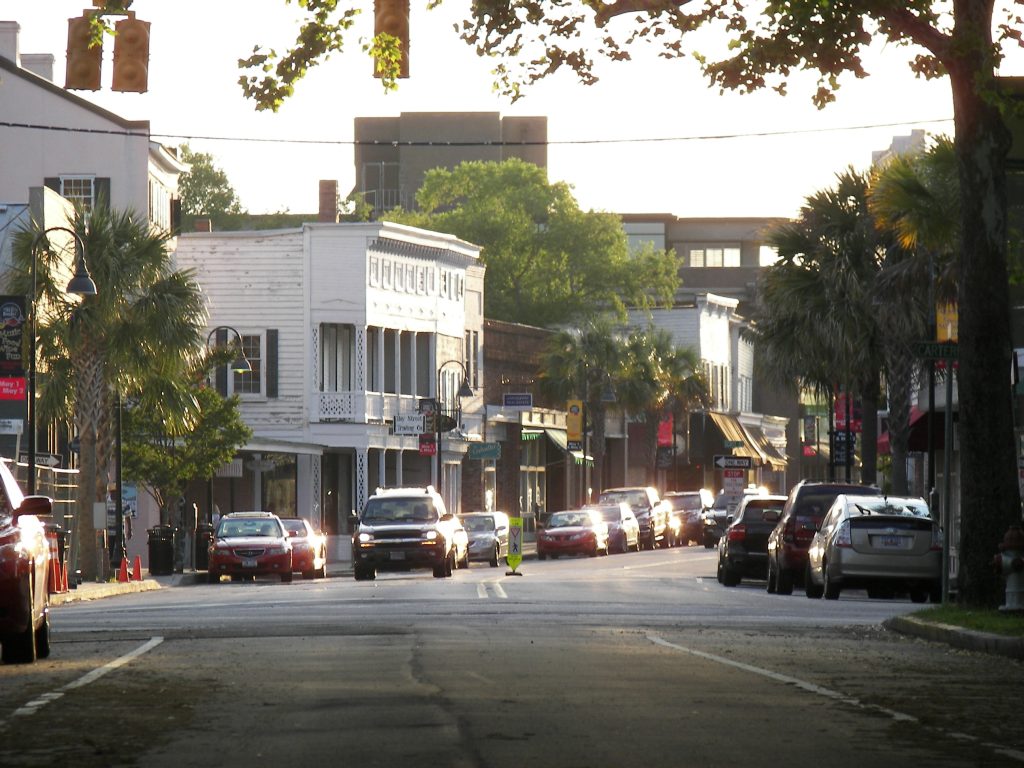
Unlike larger, more commercialized filming locations, Beaufort offers a quieter, more controlled environment. Crews can film without the constant disruptions of heavy tourism or urban congestion. Our supportive local community and experienced regional film offices also contribute. An example of this can be seen in The Big Chill. In the 1983 film, characters Harold Cooper (Kevin Kline) and Nick Carlton (William Hurt) were jogging down Bay Street in historic downtown on a quiet morning.
The nearby Marine Corps Air Station Beaufort has also played a role in productions requiring military authenticity, further expanding the area’s appeal.
Beyond logistics, there’s a certain intangible quality to Beaufort—something that can’t be replicated on a soundstage.
The pace of life, the way light moves across the marsh, and the water at dusk resonate on screen. Directors often seek locations that feel like characters themselves, and Beaufort delivers exactly that.
In an industry where digital effects can create almost anything imaginable, Beaufort’s enduring appeal lies in its reality. It doesn’t need to be transformed or enhanced; it simply needs to be seen. And as long as filmmakers continue to chase authenticity, atmosphere, and natural beauty, Beaufort’s Lowcountry scenery will remain one of Hollywood’s best-kept secrets.