Beaufort, South Carolina’s rich and surprising ties to the literary world.
It tells a story of celebrated authors, local voices, cultural celebration and the way a small Lowcountry town inspires big literary ambition.
A Lowcountry Muse
Beaufort, South Carolina — a gentle coastal town draped in mossy oaks and cradled by tidal waterways — isn’t just a postcard of Southern charm. It’s also a place of deep literary roots. Here, storytellers have found both inspiration and home, where the love of the written word is cherished and cultivated.
Pat Conroy: Beaufort’s Most Famous Storyteller
Central to Beaufort’s literary identity is Pat Conroy (1945–2016), one of America’s most beloved Southern authors. Best known for The Great Santini, The Prince of Tides, The Water Is Wide and Beach Music, Conroy’s work blends emotional depth with evocative settings deeply rooted in the Lowcountry landscape. In his own words, Beaufort was the place where he finally felt he had a home. And it became the creative anchor for much of his writing life.
Today, the Pat Conroy Literary Center in downtown Beaufort stands as a living tribute to his legacy. Open to the public and free to visit, the Center preserves Conroy’s memorabilia. The Center promotes literary arts through readings, workshops, residencies and community events. It’s recognized as South Carolina’s only affiliate of the American Writers Museum and is designated a United for Libraries Literary Landmark by the American Library Association.
Every fall, the Center hosts the Pat Conroy Literary Festival. The Festival draws writers and readers from across the country. The event offers author panels, creative workshops, film screenings and readings. It is a four-day celebration of storytelling that expands well beyond Conroy’s own work.
More Voices from Beaufort’s Literary History
These figures — and others connected to the town — underscore Beaufort’s historic place not just as a backdrop for stories but as a source of literary talent in its own right.
- Ann Head (1915-1968) was a novelist born in Beaufort whose books — including Mr. and Mrs. Bo Jo Jones — were widely read for decades. She was also Conroy’s first writing mentor, and her recent induction into the South Carolina Academy of Authors highlights her enduring contributions to Southern letters.
- William Elliott (1788–1863), a Beaufort-born essayist and poet, wrote on topics ranging from rural life to political thought in the 19th century, contributing to the Southern intellectual press of his day.
- Mary Scrimzeour Whitaker (1820–1906), another native of the Lowcountry, made her mark as a poet, essayist, novelist and critic — part of the broader 19th-century literary culture tied to Beaufort’s region.
Beaufort’s ties to literature extend beyond individual authors.
Meanwhile, the region’s culture and settings have inspired storytelling in multiple forms. The area’s Lowcountry history, Gullah traditions and natural beauty have all appeared in works of historical fiction and literary nonfiction.
A recent example is the South Carolina ETV documentary-lit series “Books By The River,” filmed on the banks of the Beaufort River and featuring conversations with Southern authors about their craft and influences.
Our locally owned and operated bookstores are a part of the community.
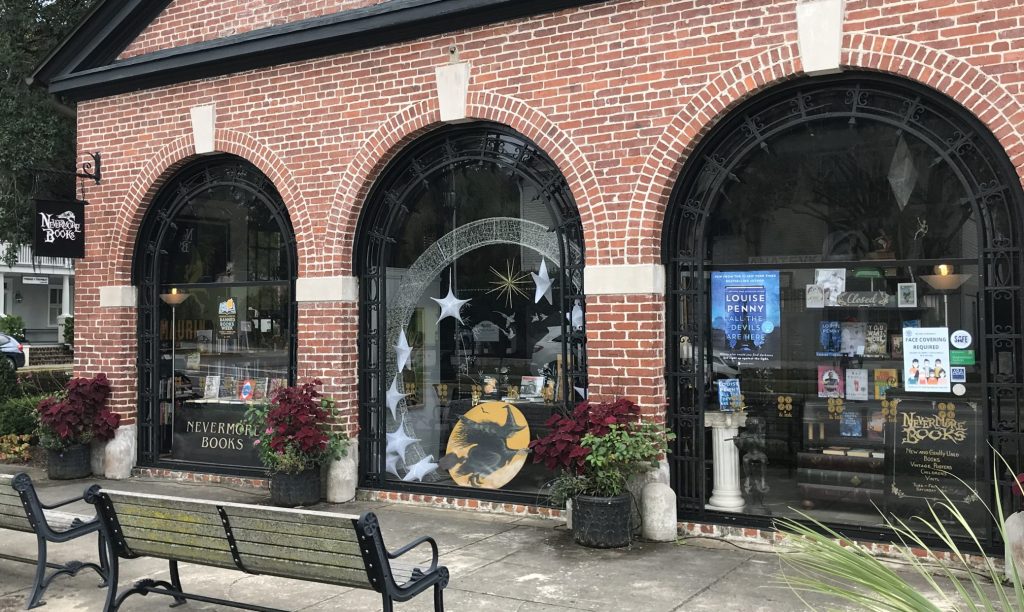
Today, Beaufort’s local bookstores foster literacy and a tactile connection with the printed word. They strengthen neighborhoods by acting as gathering spaces for events and promoting diverse, independent or local authors. Nevermore Books and the Beaufort Bookstore are wonderful places to consume local authors and be a part of Beaufort’s love of literature.
Why Beaufort Matters to Writers
What makes Beaufort such fertile literary ground? For many authors, it’s the juxtaposition of rich history and quiet reflection. The tide-sculpted landscapes, centuries-old architecture and deep cultural roots all invite a sense of narrative wonder. Writers like Conroy wove personal and regional memory into universal stories. Others draw on Beaufort’s past and present to explore identity, community and belonging.
More than just a setting, Beaufort becomes a character in its own stories. It nurtures creative voices and invites readers to see the world through the lens of its lush, evocative rhythms.