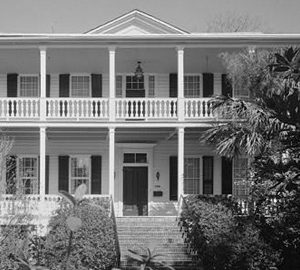
The First African Baptist Church of Beaufort is a testament to the enduring spirit and deep faith of its founders, and those who have carried on their legacy.

Built by white members of a local Baptist sect between 1863 and 1865, the First African Baptist Church initially served as a praise house for slaves legally bound to the property. It was named “Baptist Church Colored” and fostered Christian practice and community among African-Americans.
A praise house was a form of simply constructed religious architecture found in plantation complexes. The unadorned interiors of these buildings allowed for expressive prayer and song gatherings known as ‘ring shouts’.
Two years after the Civil War, freed slaves purchased the land and constructed the First African Baptist Church that stands today in much of its original state. It houses a collection of artifacts, documents, and books from its early years, including the original Bible used by Waddell, its first pastor, and an antique Communion set kept in the former parsonage.
After the Civil War, this location served as a school for Freedmen under the Port Royal Experiment.
Reverend Arthur Waddell, hailing from Georgia, was the First African Baptist Church’s inaugural pastor. Following Waddell’s tenure, Dr. H. J. Brooks assumed the role of “Pastor Emeritus.” Over time, both pastors and the congregation actively engaged in religious and civic activities.
A marble plaque at the church details its history and dedication to Reverend A. Waddell in 1865. It states, “Presented as a token of respect by A.D. Deas to the first and present pastor, Reverend A. Waddell, of the First Baptist Church, a native of Savannah, Georgia, who became pastor of said church First of January, 1865.”
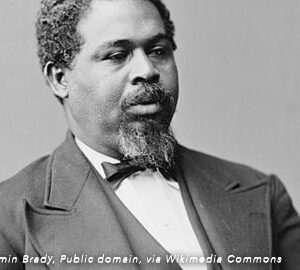
A monument on the church grounds honors early member Robert Smalls, an African-American hero of the Civil War and a US congressman during Reconstruction.
Smalls and his family were members of the First African Baptist Church. He played a key role in buying the church from the larger Baptist Church of Beaufort and generously supported it.
Smalls recognized the vital role of black churches in African American communities. He consistently backed them spiritually, financially, and politically throughout his life. His baptism took place at First African in 1905. In 1915, his funeral took place at the same church, with his burial at Tabernacle Baptist Church on Craven Street.
The two-story white wood-frame building is included on the National Register of Historic Places and is a part of the Reconstruction Era National Historic Network.
A historical marker sites that the First African Baptist Church depicts the Carpenter Gothic architectural style. This style applies Gothic Revival details to wooden structures. Carpenter Gothic evolved naturally from the abundance of timber. Carpenters used this resource of wood and carved Gothic elements typically seen in stone.
The First African Baptist Church is a focal point of the Beaufort community that has stood for over 150 years. Stop by this designated historic landmark at 601 New Street which is just as fascinating as it is beautiful.